








Your gouache colours are lying to you.

You mix something on the palette and it looks exactly right. Warm, clean, alive. You drag it across the paper and for one beautiful half-second you think — yes, that's it. Then it dries.

Whatever that colour was, it isn't that anymore. Flatter. Duller. Like someone turned the saturation down and forgot to tell you. The colour you mixed isn't the colour you're going to get.

Refund if nothing shifts. No hoops.
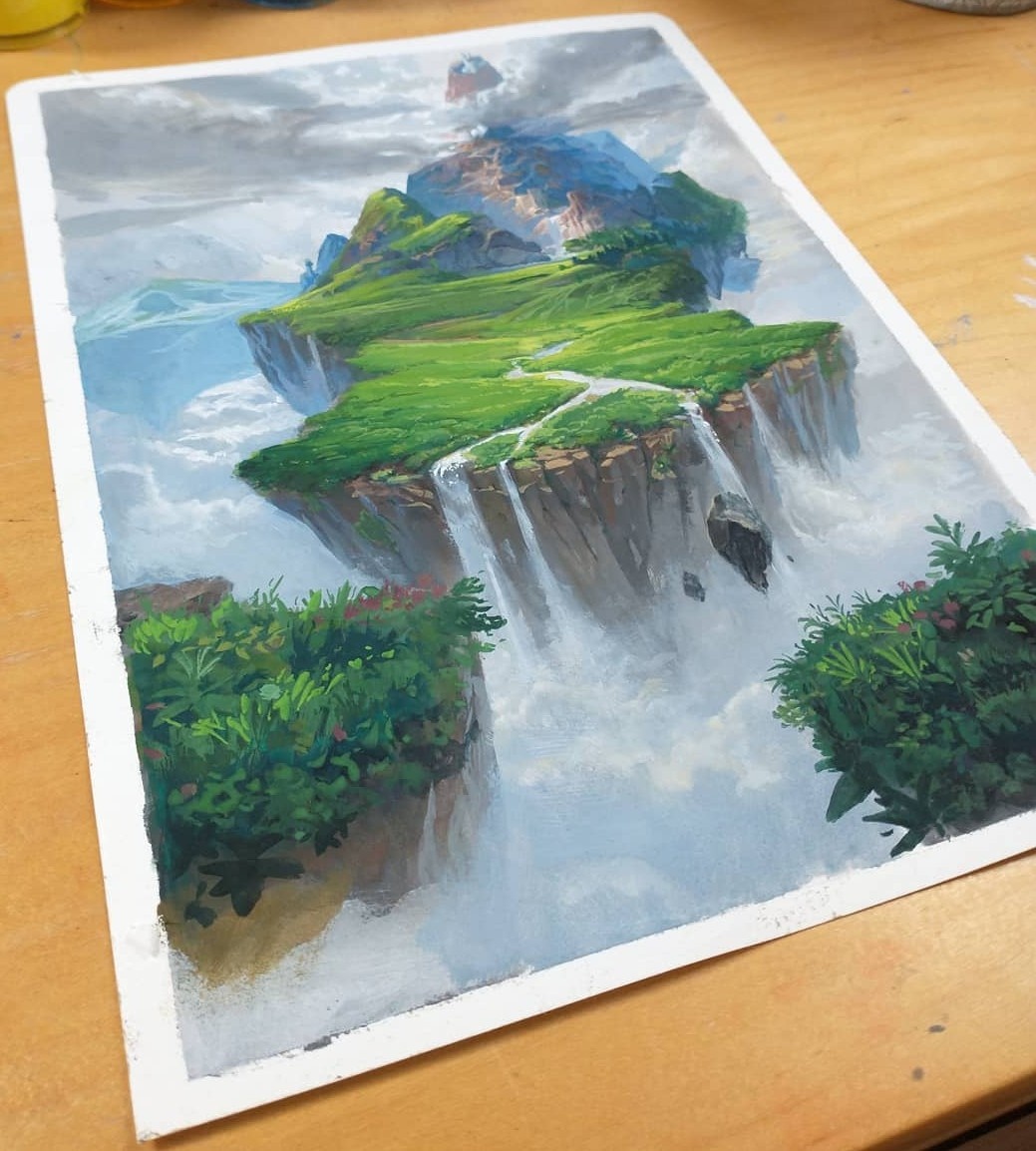
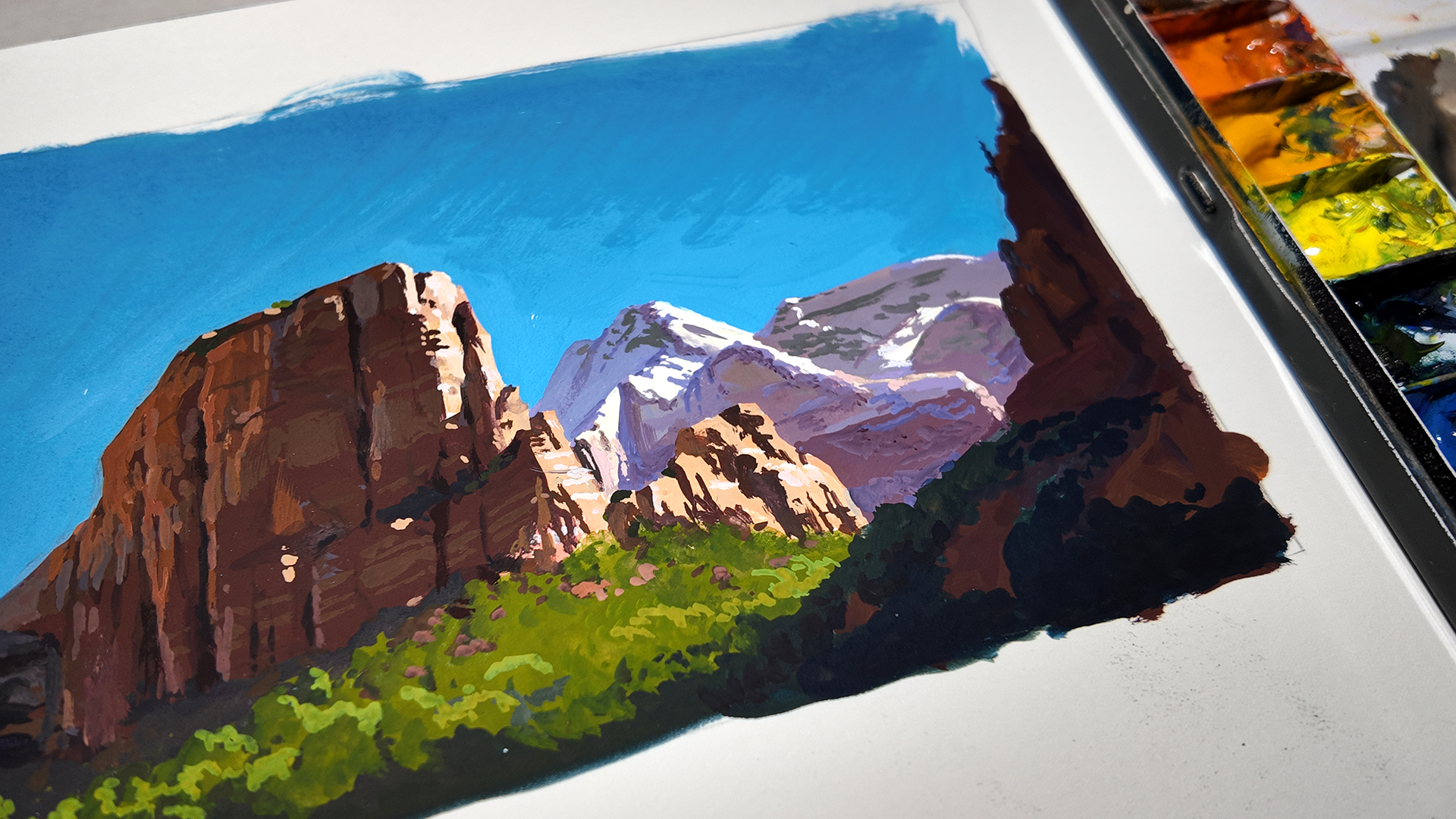
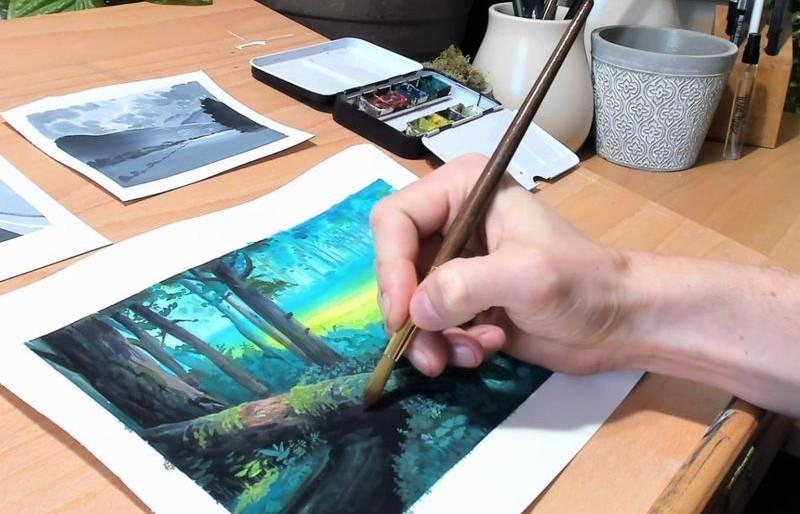
A clean gouache mix on the palette beside the finished study

The real problem

Here's the real problem

You're not struggling because you don't have "the eye." You're not struggling because you haven't found the right colours yet, or because your palette is wrong, or because you're somehow less naturally gifted than the people whose work you keep saving to your phone at midnight.

You're struggling because muddy colour in gouache is a cause-and-effect problem — and almost everything that goes wrong happens before the brush hits the paper. It happens on the palette. In how the colours relate to each other. In decisions you're making without the information you'd need to make them well.

Once you can actually see that — really see it, not just read it — you stop guessing. You start mixing on purpose.

Without this, you'll keep…

Even if you like painting, this keeps happening

Mixing something gorgeous and watching it die on the page as it dries
Second-guessing every colour decision until the moment's already gone
Painting cautiously, carefully, bracing for the inevitable disappointment
Adding more water, or less water, or a different colour, or just hoping harder — none of which are actual strategies

And here's the part that really stings: you're doing all of this even though you like painting. Even though you've watched the videos. Even though you've bought decent supplies and you're putting in real time. The medium just won't cooperate, and nobody has explained why in a way that actually helps you fix it.

Even if you've been struggling for months, or years. Even if colour theory resources didn't stick. Even if you've started to wonder whether gouache just isn't for you — it's not you. It's a gap in the explanation you were given. And it's fixable.

The part nobody tells you

The secret is not a colour recipe. It's a relationship system.

Most colour-mixing content out there is borrowed from watercolour or oil painting, with "gouache" swapped into the title. The underlying mechanics are completely different, but nobody stops to explain that part — so you apply the advice faithfully and still end up with flat, muddy results and no idea why.

What actually works for gouache is learning to build the relationship between colours on the palette before you commit anything to paper — and knowing, in advance, exactly how that mix is going to shift when it dries. That's not magic. It's not talent. It's cause and effect, and you can learn it.

Straight from the studio

Watch the method in motion


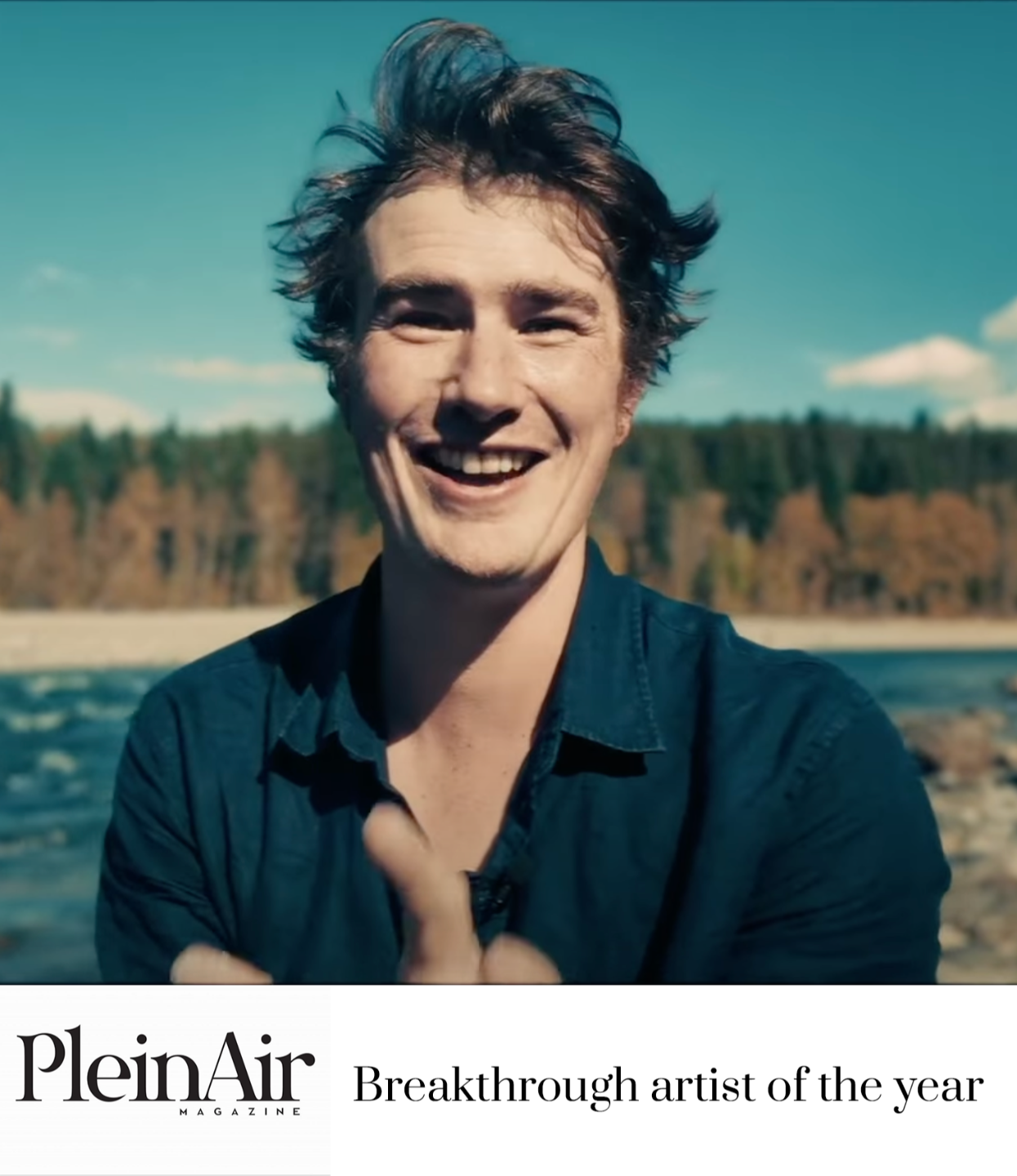
Justin Donaldson painting outdoors in the forests around Clemson, South Carolina
A quick introduction

Because context matters here

My name is Justin Donaldson. I'm a painter. I immigrated from Australia to the US, married here, and spent my first year in the country legally unable to work — so I painted. Every day, in the forests around Clemson, South Carolina. Just me, whatever I could carry, and a lot of time.

I started in oils. Then we had a kid. And a cat. And a small house. Wet oil paintings became, let's say, logistically complicated — so I switched to gouache because it fit in a bag, dried fast, and didn't require a dedicated studio I didn't have.

And then I spent years fighting it. Gouache felt wild. Hard to control. The drying shift — that colour-changing trick it pulls — drove me absolutely crazy.

Plein Air Magazine eventually called me their Breakthrough Artist of the Year. But there was no natural gift that got me there. There was a long, grinding period of trial and error, followed by the moment I finally understood the mechanics of what was happening on my palette. Everything changed. Not overnight. But definitively.

What changed

Here's what that shift actually looked like

I used to finish a painting session feeling like I'd been fighting the medium the whole time — applying colour and hoping, apologising with my brushstrokes, painting carefully to minimise the damage rather than paint well. The problem wasn't effort. I was putting in plenty of effort. The problem was I didn't have the right information to turn effort into understanding.

Once I understood the mechanics — how water ratio, pigment concentration, and the specific behaviour of gouache as it dries all interact — I stopped being surprised by my results. I started predicting them. And then I started choosing them. That's the difference between fighting a medium and working with one.

I've used this method to go from hating gouache to calling it the most versatile medium I work in — and several of my students have made the same jump, including one who went from struggling with the basics to becoming a professional gouache artist in her own right.

What's different

Here's what's different about this

Most colour resources are built for a different medium and quietly assume you already know things you don't. This one starts from zero, and only ever talks about gouache.

01Built for gouache onlyThe drying shift, the palette relationships, the specific way this medium behaves — all of it, addressed directly.
02Hands-on from the first few minutesNot a lecture you watch. A sequence you do, so the lesson lands in your hands, not just your head.
03Built around mechanics, not recipesRecipes run out. Understanding doesn't.
04A finished result, first sittingNot a promise for someday. Actual proof, in your hand.
What this gets you

Using this, you can:

Walk into every painting session knowing what your colours are going to do — before they do it. Mix clean, vibrant, alive colour on purpose.

Stop second-guessing every choice and start making them with the kind of confidence that only comes from actually understanding what's happening on your palette. Not someday. From the first sitting.

The exercise sheet mid-way, wet mixes beside dried swatches
This works even if
You've been struggling with muddy colour for months, or years.You've tried colour theory resources before and they didn't stick.You're newer to painting and feel like you're missing foundational knowledge.You've started to suspect this is a talent problem. (It's not.)
This isn't for
People looking for passive content to half-watch.Anyone who isn't willing to actually pick up a brush.Casual curiosity — this is for people who are genuinely frustrated and ready to do something about it.
Where this came from

Here's how this came to exist

I built the full version of this as a module inside my 8-session Gouache Course — because after years of watching students struggle with muddy colour and feeling like they'd failed somehow, I realised the colour-mixing breakthrough I'd had was teachable. It wasn't luck. It wasn't talent. It was a method.

That module became the thing students kept coming back to. The thing they said unlocked everything else.

So I pulled it out, built it into a standalone guided sequence, stripped out everything that wasn't essential, and made it available for $27 — because nobody should spend years fighting their own palette when this information exists and can be handed to them in a single afternoon.

Inside the Gouache Course lab where this method was first taught

You could do what I did

The hard waySpend years in trial and error. Watch every free video. Read every colour theory resource you can find, most of which will be written for watercolour or oil without telling you. Cross your fingers at the start of every session.
The shortcutThe Un-Muddy Your Colours method condenses what took years to piece together into a single, focused, hands-on sitting. No fluff. No filler. No forty-minute lecture on colour wheel theory you already half-know. Just the real mechanics of how gouache behaves, and your own hand proving it to you in real time.

I've made all of those mistakes so thoroughly I basically have a PhD in Things That Don't Work. That period was useful to me eventually, but I wouldn't wish it on anyone — and I definitely wouldn't wish it on you.

What's inside

Here are 5 things you'll discover inside

01The palette relationship systemWhy your colours already work together before you've touched the paper — and why most people skip this step without realising it's the one that matters most.
02Predict a drying shift before it happensThe specific thing gouache does that catches everyone off guard, and how to get ahead of it instead of reacting after the damage is done.
03The early-diagnosis methodHow to catch a mix that's going wrong while it's still fixable, not after it's already flattened a passage you spent twenty minutes building.
04Palette right, paper wrong — whyThe real explanation for why a colour looks right on the palette and wrong on the paper. It's not the lighting, and it's not your eyes.
05The one water-to-pigment relationshipThe single variable that accounts for more muddy colour than any other — and how to use it deliberately rather than accidentally.

And a few more things waiting for you inside

Why "just add more white" is the advice that's been quietly destroying your colours — and what to do instead when a mix feels too dark.
The exact reason confident painters look confident — it's not bravado, it's a specific kind of information they have about what's going to happen before it happens.
How to make a colour feel alive — there's a mechanics-based reason why some combinations vibrate and others sit flat, and once you know it you'll see it everywhere.
A finished piece of evidence in your hand — from your first sitting with this method, something you made that proves this is working, not a promise that it will.
The price

$27. For today, and until I decide otherwise.

A single tube of quality gouache runs you $8 to $12. A wasted painting session costs you an evening and another chip out of your confidence. Most colour theory workshops — the ones that are actually good — run between $50 and $150 for a single session, and almost none of them address gouache specifically. You've probably already spent more than $27 on a session that didn't go the way you wanted.

The Un-Muddy Your Colours Method

$27

Top features

The full guided exercise sequence$47
The palette relationship system$27
The drying-shift prediction method$27
The early-diagnosis framework$17
Instant, permanent access — no expiry$0
Total value$118+
Your price today$27
Get The Un-Muddy Your Colours Method
MY GUARANTEE

A single tube of quality gouache runs you $8 to $12. A wasted painting session costs you an evening and another chip out of your confidence. Most colour theory workshops — the ones that are actually good — run between $50 and $150 for a single session, and almost none of them address gouache specifically. You've probably already spent more than $27 on a session that didn't go the way you wanted.

Why so affordable

Why is this only $27?

Because I'm not trying to make this an event. I'm trying to get it into the hands of as many artists as possible who are fighting the same thing I was fighting — and a high price tag is a friction point that stops people from solving a solvable problem.

The $27 is also a filter. It screens out people who are looking for passive content to half-watch. If you're willing to spend $27 and pick up a brush, you're the person this was built for.

Spots at this price aren't guaranteed to stay. I reserve the right to change this whenever I feel like it — which is an honest thing to say, even if it's a slightly uncomfortable thing to read.

If you've been waiting for the right time to stop guessing and start mixing colour on purpose: this is it.

One more thing

A warning before you go

You will have to actually pick up a brush. I mean that gently but seriously. This is a hands-on sequence. The exercises are where the learning happens, and if you download this and it sits in a folder, it will not do anything for your colour mixing.

But if you sit down, do the work, and let your own hand prove the method to you — the shift is permanent. You won't unmix it. You won't wake up and have forgotten it. Your hands will know, and they'll know every time you paint after this.

That's the thing about learning through doing rather than watching. It sticks. I made all the trial-and-error mistakes so you don't have to. The shortcut is right here.

Clean colour, on purpose, starting now.

P.S. Once colour stops being the fight, a new question tends to show up pretty fast: okay, but how do I keep this alive inside a real, full painting? That's a fair question, and not one this method is designed to answer on its own. If you get there and want to keep going, that's exactly what I built Gouache Studio and The Gouache Course for. But let's get your colour working first.